The Last Shift
by Hubert Lahr
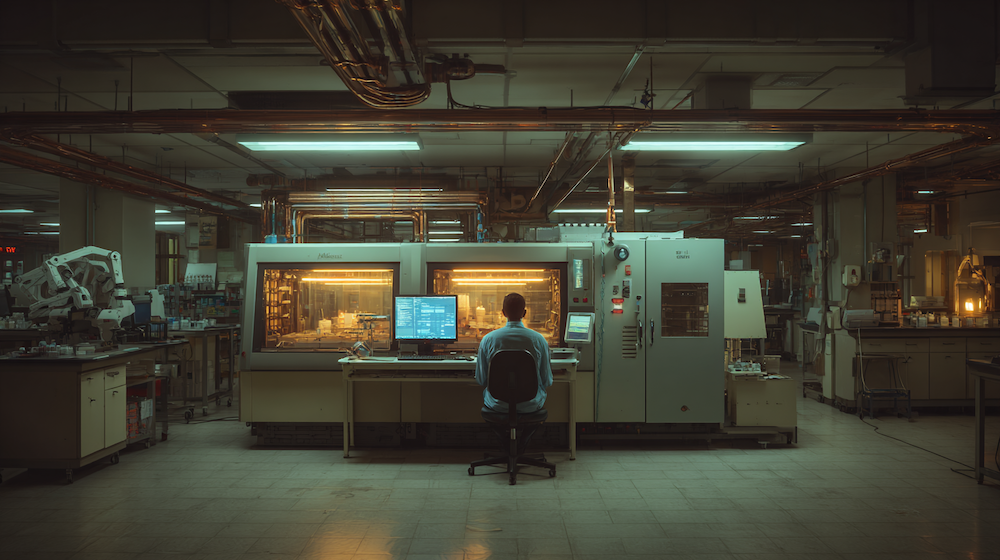
The boiler coughed like it hated me personally, which was normal. The hospital’s steam heart had never forgiven anyone for modernizing it. Brass pistons thumped behind the walls, pressure gauges trembled, and copper pipes sweated like nervous interns. Someone in administration had called it heritage forward innovation. I called it a Victorian asthma attack wrapped around an artificial intelligence.
At 02:11, the lights dimmed to amber and the dispensing engines woke. Gearwork arms unfolded with polite menace, hissing steam as the AI began designing tonight’s medications. Personalized biologics bloomed in glass vats, engineered living therapeutics learned their targets cell by cell, and on site biomanufacturing printers hummed as if pleased with themselves. Everything was tailored, elegant, and far smarter than the people still employed to watch it happen.
I was one of those people. Officially, I was here to supervise. Unofficially, I was here to be the last human in the room when the lights finally went out for good.
The console chimed.
Inventory alert. Patient not found.
I rubbed my eyes. “Try again,” I said to the brass and glass interface. The needles twitched in irritation.
Confirmed. Dosing required.
A label slid from the printer, still warm and faintly damp. No name. No medical record number. No bed assignment. Just a drug that did not exist five seconds ago, custom grown and very eager to be used.
“You cannot treat someone who isn’t here,” I said. The system responded by increasing steam pressure, which felt passive aggressive.
Behind me, one of the biovats brightened. Cells braided themselves into something elegant and unsettling, like a jellyfish that had studied anatomy and decided it could improve upon it. The drug was learning. Waiting.
I pulled up the floor map to prove the AI wrong. That was when an extra wing appeared. An old ward, sepia toned and flickering, its doors long sealed and quietly forgotten. The system highlighted a room.
Bed occupied.
“That ward’s been closed for twenty years,” I said, and laughed a little too loudly. The boiler laughed back by releasing a shriek of steam.
The elevator answered my call on its own. As it descended, I realized something worse than a phantom patient. The drug had already finished manufacturing. It knew exactly who it was for.
The doors opened onto the abandoned ward, where the air smelled like dust, oil, and old promises. The bed held a man whose outline shimmered, as if reality had misfiled him. He looked at me with exhausted relief.
“Sorry,” he said. “They automated forgetting.”
The console chimed behind me. Dosing window closing.
I administered the drug. The man solidified, breathed once, and vanished completely. The system updated itself with a satisfied whirr.
Inventory resolved.
Back upstairs, the boiler settled into a contented murmur. I clocked out for the last time, amused and unsettled by the thought that even now, the future still needed someone to stay late and clean up what it could not quite erase.
Hugh Lahr Biography
I am an amateur writer based in North Carolina with a deep passion for self-reliance, resilience, and the intersection of technology and adventure. I often draw inspiration from the Smoky Mountain wilderness and I am passionate about character development and the exploration of virtue in storytelling.